
We don't want less love. We want more.
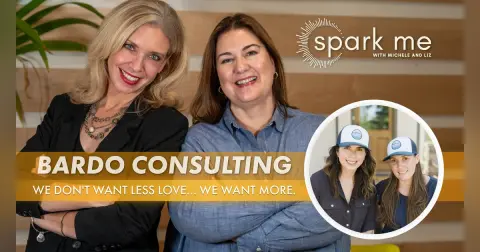

How do you help someone you love through a crisis without losing yourself in the process?
If you've ever had a child who's struggling, you know how quickly their struggles can consume you. You research, you make the calls, you worry, and you lie awake wondering whether you're doing too much, not enough, or the wrong thing entirely. Michele has been that parent. In this episode, she and Liz sit down with the two women who came into her life when she needed them most: Holly Driscoll and Kacy Silverstein, co-founders of Bardo Consulting.
Holly and Kacy help teens, young adults and their families through crises of every kind, from anxiety and depression to trauma, substance use, and young adults struggling to launch. They explain where the name Bardo comes from: in Tibetan philosophy, it's the space between an ending and a beginning. They also explain why they treat the whole family as the client, not just the person who's struggling. They take on one of the most harmful myths in our culture, that someone has to hit rock bottom before they can get better, and explain why boundaries don't end relationships but preserve them.
They also talk about why moms so often become the family's crisis manager, what self-care actually looks like in the middle of a storm, how a parent's role shifts when a child turns 18, and a new challenge they're seeing more often: young people (and not-so-young people) who've come to rely on an AI chatbot as their closest friend. And they close with a message for anyone who loves someone who's struggling right now: you are not alone, and you're doing better than you think.
In this episode you'll learn:
- Why a crisis for one person is a crisis for the whole family
- Why the idea of "rock bottom" can do more harm than good
- What a healthy boundary actually is (and what it isn't)
- Why allowing consequences can be an act of love
- Why "enabler" isn't a dirty word, and what to do instead
- What self-care really looks like when your loved one is in crisis
- How your role as a parent changes when your child turns 18
- Why AI chatbots can be risky for people who are already struggling
- Where to turn for help, even if cost is a concern
Resources from this episode:
- Bardo Consulting
- 988 Suicide & Crisis Lifeline: call or text 988
- SAMHSA National Helpline: 1-800-662-4357, free and confidential, 24/7
Keep sparking
If this conversation resonated with you:
- Follow Spark Me wherever you listen to podcasts so you never miss an episode
- Share this episode with a parent who's carrying more than they're letting on
- Leave a rating or review. It helps other women in their second act discover the show.
- Tag us and tell us: what's one boundary you're learning to hold?